



The term “business information” refers to a wide range of resources that individuals in the business world can use to learn about and debate various aspects of the industry. Information gleaned from these various channels—which can include everything from financial magazines, daily newspapers to colleagues, professional associates, and close friendships be invaluable in assisting business owners in tackling various operational processes, including marketing, competitive analysis and product forecasting (Business Information sources, n.d). Author Michael R. Lavin notes that corporate information is vital for two core functions—problem solving and strategic planning—in his book Business Information: How to Find It, How to Use It (Business Information sources, n.d). Markets can be assessed through the collection and analysis of data, which can be used to conduct surveys of consumers’ evolving preferences and demands, track purchasers’ intentions and attitudes, and analyze the market’s unique qualities.
PRINT INFORMATION Books, magazines, newspapers, newsletters, are all included in the broad category of print. Books and journals are examples of print documents that are quite easy to obtain. Every year, hundreds of books about running a business are published and added to the collections of public, business, and academic libraries (Business Information sources, n.d). The publishing industry has seen a rise in books that address more existential concerns, such as work-life balance, healthy interpersonal dynamics in the workplace, the very definition of entrepreneurship, and a plethora of other topics that are relevant to business owners.
Internal records: These are documents that are created and stored within a business. The document is used to support the processes of the organization (Maamari & Osta, 2021). Examples of internal documents are employee timecards and timesheets, purchase requisitions, scrap authorizations receiving reports, production plans, and sales orders. A good example of internal records is the human resources information system (HRIS). This system possess a vast variety of data including payroll, recruitment, training and performance management (Maamari & Osta, 2021). All this data can be really effective in business planning especially informing about the effectiveness of the workforce. For instance employee performance data can be very effective in providing information when assessing the adaptability and performance of a in implemented strategy.
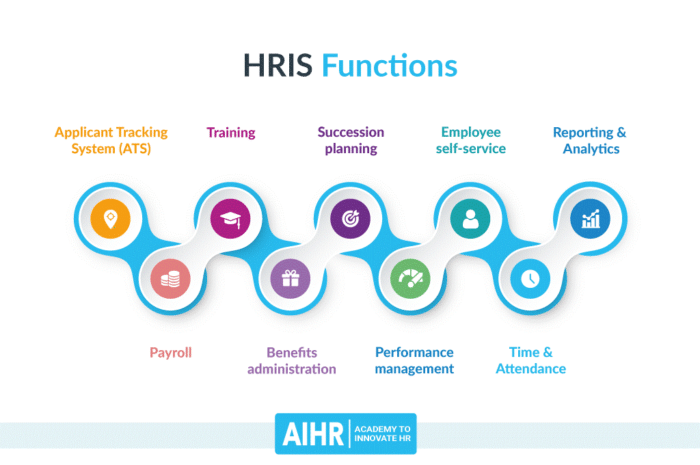
HRIS Functions
Annual reports: annual reports are often provided by organisations to inform stakeholders about the performance of an organisation. It includes financial information such as balance sheets, income statements etc. as well as operational information such as managerial decisions (Business Information sources, n.d). This data can be very effective in informing management planning as organisation performance can be tracked over time. The data can also inform investors on investing with the organisation as they are able to get a glimpse of the organisations profitability and strategies through time.