



The key stages of the research process
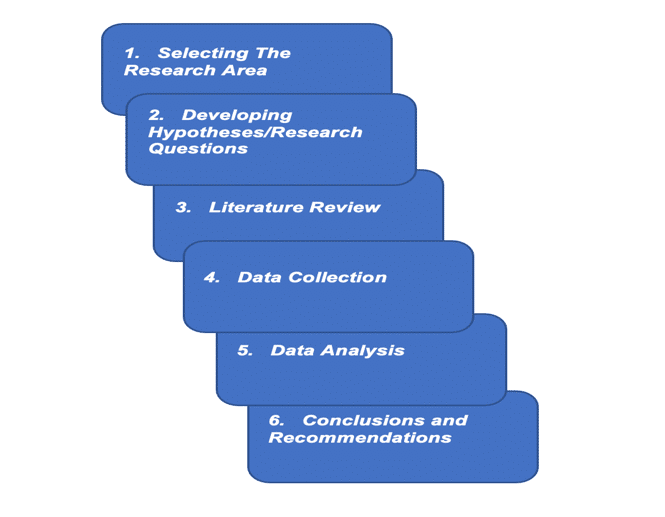
key stages of the research process 5UIN Assignment Answers
Sources from: Lumen Learning, n.d
In typical cases, the research procedure consists of six essential steps:
- Selection of the area of research
The first thing the researcher needs to do is make it clear that they choose the topic of the study based on either their personal or professional interests in the subject matter, and this assertion needs to be genuine. (Oluwatayo and Adetoro, 2020). The entire research cycle can be greatly streamlined if the researcher selects a topic or issue that genuinely interests them.
- Hypotheses/Research Question Development
An hypothesis is an equivocal statement that can be backed up by facts but is still open to modification. A research question is a specific kind of scientific inquiry used to elicit information from study subjects. Research questions are formulated with the intention of eliciting information regarding the experiences, views, and perspectives of the study’s participants, which is essential for achieving the objectives of the investigation. (Jensen, 2020). The choice between developing research questions and hypotheses is impacted by the study methodology. Multiple trials and modifications are often the result of well-defined study aims, objectives, and hypotheses, which must be specified (Jensen, 2020).
- Literature Review
A literature review explores scholarly works and other resources pertinent to the field of research at hand; it also evaluates these publications and other resources that are relevant to the area of study (Oluwatayo and Adetoro, 2020). Previous studies should be cited, summarized, critically evaluated, and clarified in the review. In addition to providing a concise overview of the relevant literature, researchers are also expected to highlight key concepts and findings that support their study (Jensen, 2020). They must also search the literature for essential concepts, outcomes, hypotheses, and reasons, as well as the contrasts and comparisons with closely connected studies. (Jensen, 2020).
- Data Collection
Data collection utilizes a methodical approach to gather measurements or observations. Data collecting aids researchers in gaining first-hand knowledge and distinctive perspectives on the research subject, whether they are conducting research for business, governmental, or academic purposes (Oluwatayo and Adetoro, 2020). Data collection methods must be adopted, after carefully weighing the benefits and drawbacks of all available data gathering choices. In research requiring the gathering of primary data, a comprehensive examination of the benefits and drawbacks of different primary data collection approaches must be conducted. (Jensen, 2020).
- Analysing Data
Researchers can break down a large dataset into manageable pieces by using research data analysis to summarize the data and assess it to gain insights (Oluwatayo and Adetoro, 2020). Data analysis is critical to achieving the study’s aims.
- Conclusions and Recommendations
The final part of the research process involves utilizing findings from data analysis to generate pertinent conclusions and answers to the current research question/hypothesis.